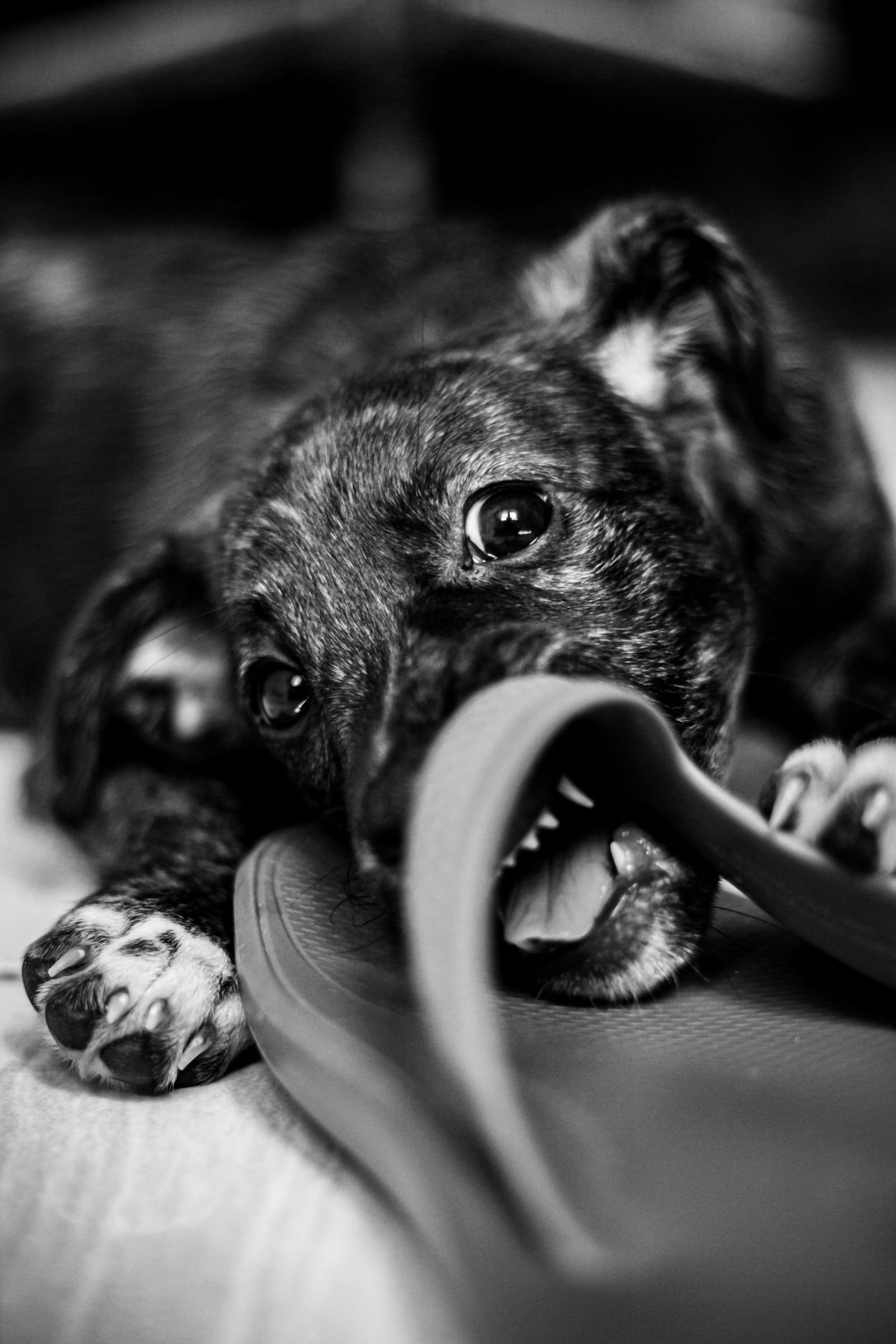
A surprising amount of “bad dog behavior” is really just a smart animal with nothing to do.
Common signs of a bored dog
Destructive chewing. Shoes, cushions, table legs — if it happens mostly when your dog is understimulated, boredom is a prime suspect.
Digging. Especially in the same few spots in the yard.
Attention-seeking. Pawing, nudging, barking at you, dropping toys in your lap on repeat.
Pacing and restlessness. A dog that can’t settle even after a bathroom break.
Over-excitement. If every tiny event triggers an explosion of energy, your dog may not be getting enough outlets.
Excessive sleeping. Some bored dogs don’t act out — they shut down.
Why it happens
Most dogs were bred to work — herd, retrieve, guard, hunt. The average modern dog gets a fraction of the physical and mental activity their genes expect. A 20-minute potty walk is maintenance, not stimulation.
The fix: work the body AND the brain
- Upgrade walks. Let your dog sniff. Sniffing is mental work — a 20-minute “sniff walk” can tire a dog more than a fast march.
- Puzzle feeders. Make meals a game instead of a 30-second event.
- Training sessions. Five minutes of learning a new trick is serious mental exercise.
- Rotate toys. Keep most toys hidden and swap weekly — old toys become new again.
- Play with purpose. Fetch, tug, hide-and-seek with treats around the house.
- Dog friends. Playdates or daycare for social dogs.
The payoff
A stimulated dog is calmer, happier, and far less destructive. Most owners see changes within days. Boredom is one of the easiest dog problems to fix — it just asks a little creativity from the human end of the leash.