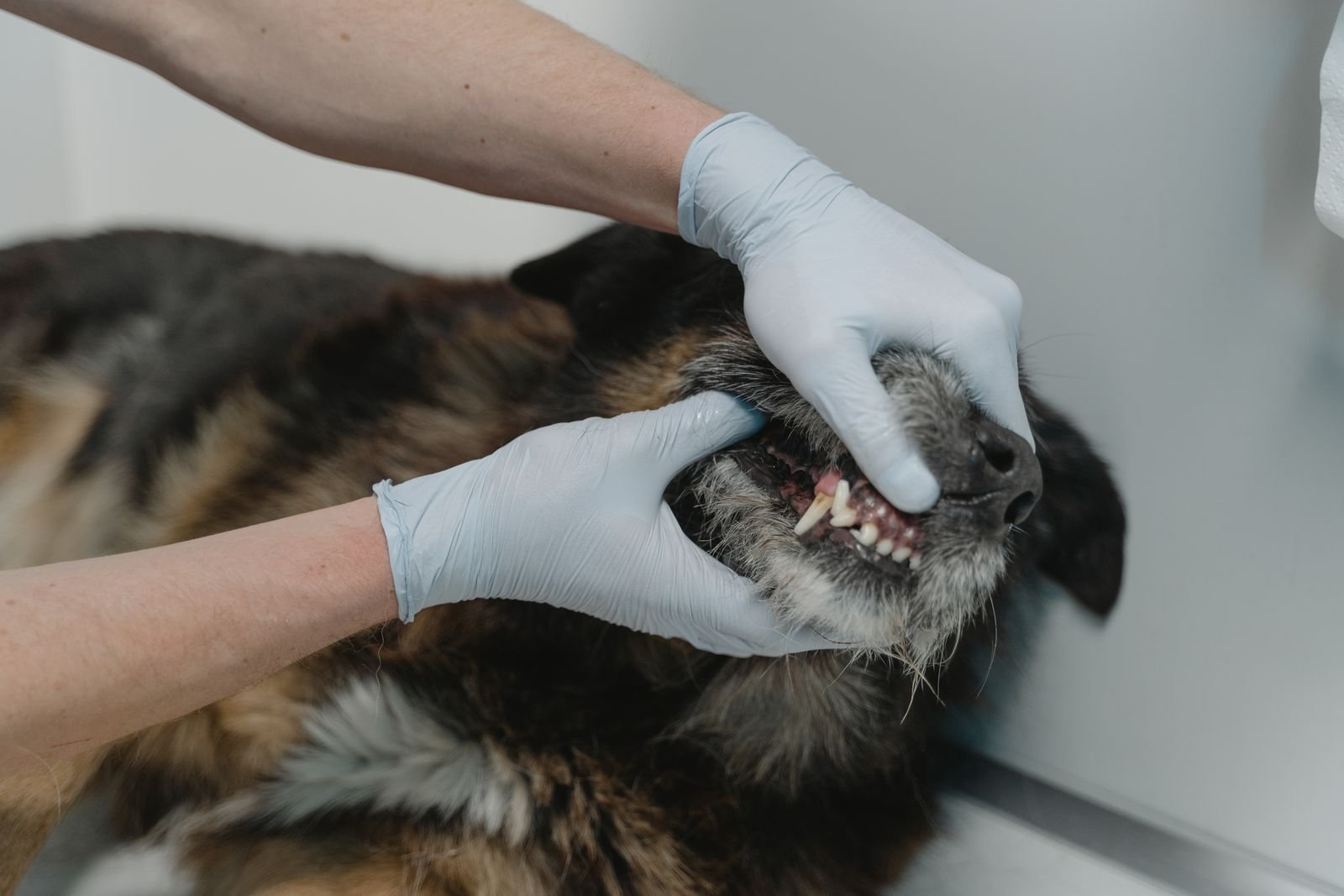
The Problem You Can’t See From Across the Room
Dental disease is one of the most common health problems vets find in dogs, and by the time owners notice it, it has been developing quietly for years. Plaque forms within a day or so of cleaning. Left alone, it hardens into tartar, which you can’t brush off. Tartar creeps below the gumline, the gums get inflamed, and eventually the structures holding the tooth in place start to break down.
None of that announces itself. Dogs are stoic about mouth pain in a way that borders on unhelpful. They keep eating. They keep playing fetch. Meanwhile bad breath — the thing most owners write off as normal dog breath — is often the first real sign that something is going on under the gumline. And this isn’t cosmetic: advanced dental disease is painful, and vets generally treat it as a whole-body health issue rather than a mouth-only one.
Introducing a Toothbrush to a Dog Who Wants No Part of It
If you come at your dog with a toothbrush on day one, you will lose. The trick is going so slowly it feels silly.
Spend a few days just touching your dog’s muzzle while you’re both relaxed on the couch. Treat, praise, done. Then start lifting a lip for a second — one second — and treating. Then let your dog lick dog toothpaste off your finger, because most of it is flavored like poultry or malt and dogs generally consider it a snack rather than a chore.
From there, rub a little paste on a few teeth with your finger or a finger brush. Then a soft toothbrush, a few teeth at a time. You are not aiming for a full mouth on day one, or day ten. You’re aiming for a dog who doesn’t flinch.
A few things that make it easier:
- Focus on the outside surfaces. That’s where most tartar builds up, and the tongue does some work on the inside.
- Angle the bristles toward the gumline — that’s where the trouble starts, not on the flat of the tooth.
- Same time, same spot, every day. Routine does more for cooperation than technique does.
- Keep it short. Thirty seconds daily beats a five-minute wrestling match once a week.
- End before your dog wants to. Stop while it’s still going well and the next session starts from a better place.
Toothpaste, and the One That Can Hurt Your Dog
Never use human toothpaste. This is the one hard rule here. It contains fluoride, which dogs shouldn’t swallow, and many brands — especially anything sugar-free or whitening — contain xylitol, a sweetener that is genuinely dangerous to dogs even in small amounts. If your dog gets into human toothpaste or any xylitol product, call your vet or an animal poison control line right away rather than waiting to see what happens.
Dog toothpaste is made to be swallowed, which is the whole point — dogs won’t spit. It comes in flavors dogs actually like, and that flavor is doing a lot of the training work for you. No rinsing required.
What Chews Actually Do, and What They Only Claim
Dental chews and toys can help, and the marketing around them oversells what they do. A chew a dog gnaws on for a while creates mechanical scraping that reduces plaque — real, but partial. No chew removes tartar that has already hardened, no matter what the bag says, and nothing on the shelf replaces brushing.
Look for products carrying the Veterinary Oral Health Council seal, which means they were tested against a standard rather than just described enthusiastically. Beyond that, use judgment on hardness. Antlers, hooves, and hard nylon bones are common causes of fractured teeth — the rough rule many vets use is that if you can’t dent it with your thumbnail, it’s too hard. Ridged rubber toys are a safer bet, and one that keeps a dog chewing does more good than a chew swallowed in ninety seconds.
And if your dog already has visible brown buildup along the gumline, brushing won’t reverse it. That’s a conversation with your vet, who can see what’s under the gums and tell you whether a professional cleaning makes sense. Starting from a clean mouth makes everything you do at home count.
Two minutes on the couch, most nights, with a dog who has decided this is just a thing you do together. There are worse habits to build.