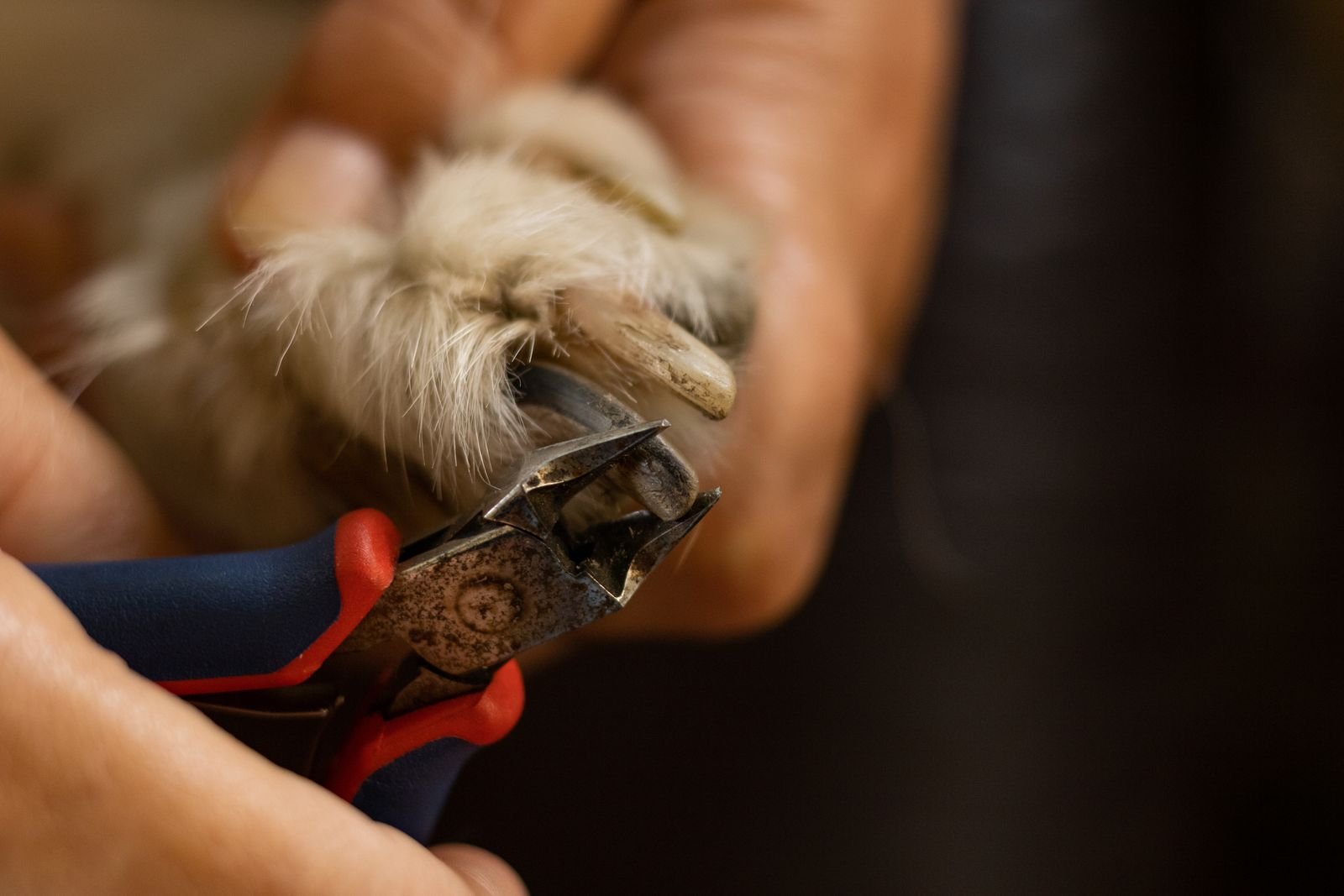
Why Everyone Is Scared of This
Nail trims go wrong for one reason, and it has a name: the quick. Inside each nail is a core of soft tissue carrying a blood vessel and a nerve. Cut into it and the nail bleeds — sometimes impressively — and it hurts. One bad trim teaches a dog that clippers mean pain, and that lesson sticks for years.
So most owners avoid the whole business. The problem is that overgrown nails aren’t cosmetic. Nails that touch the ground push back into the nail bed with every step, which is uncomfortable and can change how a dog stands and moves. Left long enough, a nail can curl around and grow into the pad.
There’s also a quirk that works in your favor: the quick grows out along with the nail, so long nails have long quicks. Trimming regularly encourages the quick to recede, and the nails you can barely touch today become nails you can trim properly in a couple of months. The way out is through, in small steps.
Finding the Quick Before You Cut
On light or clear nails, this is easy. Hold the paw up to good light and you’ll see a pink triangle running down the center, stopping short of the tip. That pink is the quick. Cut in the pale, hollow-looking part beyond it, leaving a comfortable margin.
Dark nails are the reason this article exists. You can’t see through them, so you read the cut surface instead. Trim a thin sliver off the tip and look at the cut end straight on. At first it looks chalky and uniform. As you get closer to the quick, a small dark or grayish dot appears in the center, often slightly moist. That dot is your stop sign — when you see it, you’re done with that nail. The underside tells the same story: hollow near the tip, solid where the quick begins.
The Tiny Slices Method
The single biggest improvement most people can make is cutting less per snip and doing more snips. Take off slivers, checking the cut surface every time. Slower, and dramatically safer.
- Cut at a slight angle, following the natural slope of the nail tip rather than straight across.
- Hold the paw gently and don’t twist the toe — joint pressure makes dogs pull away more than the clipping does.
- Do one nail, then stop if that’s all your dog can handle. Four sessions of one paw each is a perfectly good week.
- Don’t forget the dewclaws. They never touch the ground, so they never wear down, and they’re the ones that grow into the leg.
- Keep styptic powder in reach before you start, not in a drawer upstairs.
A grinder is a good alternative if clippers make you nervous. It removes nail gradually, so overshooting is harder, though the noise and vibration need their own introduction. Go in short bursts so the nail doesn’t heat up.
If you do hit the quick — and most people who trim their own dog’s nails eventually will — stay calm. Press styptic powder firmly against the nail tip for several seconds; cornstarch works in a pinch. Keep your dog quiet for a few minutes so a clot can hold. Then stop for the day, hand out something good, and don’t make it a whole thing. If the bleeding won’t stop, call your vet.
Rebuilding a Dog Who Panics at the Clippers
If your dog already bolts at the sight of the clippers, no technique will save the session. You have to change the association, which means the clippers come out and nothing happens.
Set them on the floor. Feed a treat. Put them away. Do that for a few days. Then touch the clippers to a paw and treat. Then squeeze them near the paw so your dog hears the click, and treat. Then one nail, jackpot treat, done. Every step should be so easy your dog looks bored. If you see a lip lick, a head turn, a paw pulled back, back up a step and stay there longer.
Handling paws outside of trim time helps enormously. Massage toes while you’re watching TV, so a hand on the paw stops predicting anything. And some dogs have a history patience alone can’t undo — there’s no shame in letting a groomer or vet tech handle it while you work on desensitizing at home.
Eventually the clippers come out and your dog just sighs and lies down. That quiet, unremarkable moment is the whole goal.