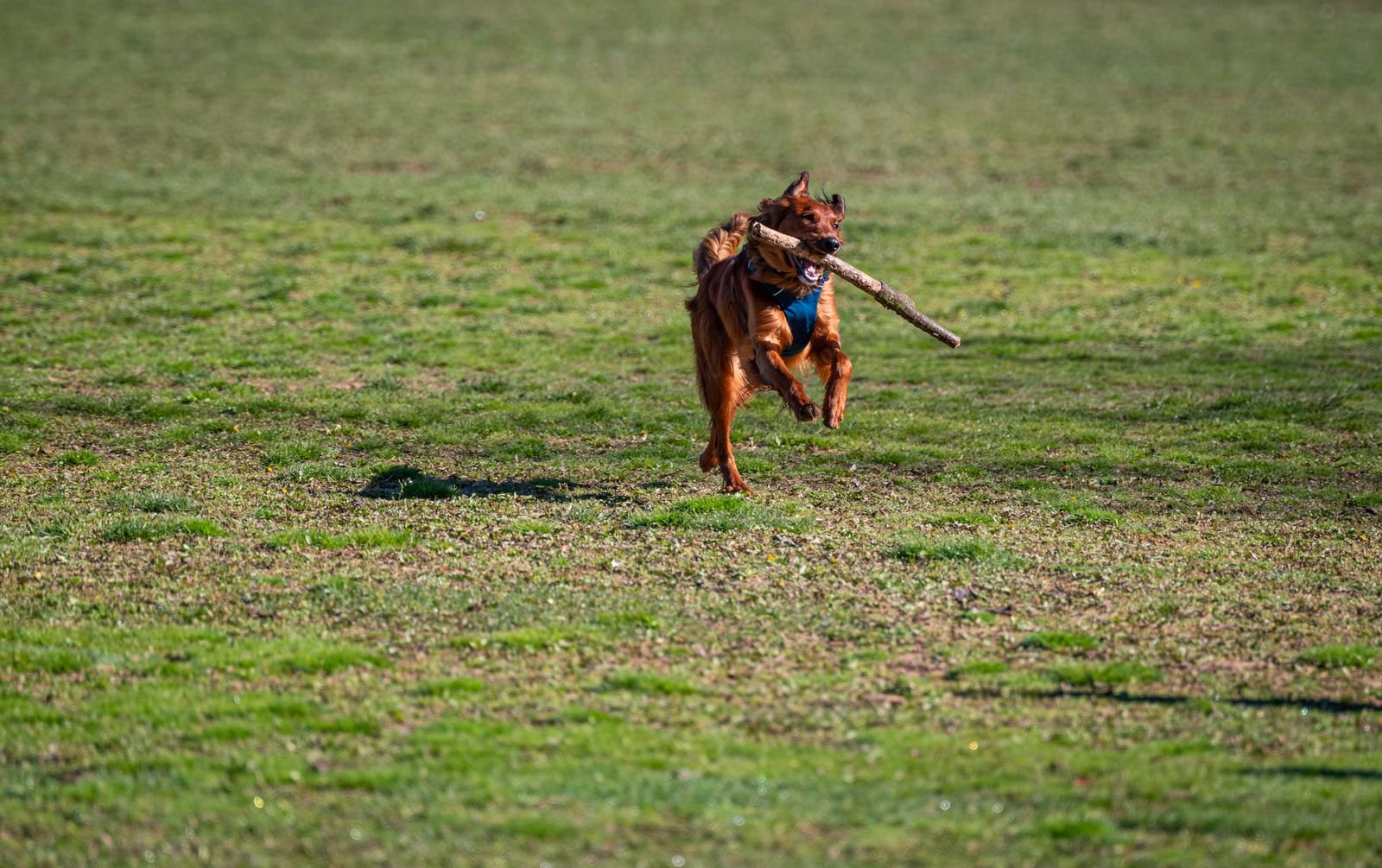
“How much exercise does my dog need?” is one of the most common questions dog owners ask, and the honest answer is that there’s no single number. A twelve-year-old bulldog and a two-year-old border collie are both dogs in roughly the way a deckchair and a racing bike are both things you sit on.
What follows is a practical framework: a starting point based on your dog, and — more useful — how to read whether you’ve got it right.
Start with a baseline, not a rule
For most healthy adult dogs, somewhere between 30 minutes and 2 hours of activity a day is a reasonable working range. Where your dog falls inside that range depends on four things.
Breed and what they were built for
This is the biggest single factor. Dogs bred to work all day need to work, or something close to it.
- Working and herding breeds — border collies, Australian shepherds, huskies, Belgian malinois. These are the high end. Under-exercised, they don’t become calm; they become inventive.
- Sporting and gun dogs — labradors, golden retrievers, springer spaniels, pointers. Built for endurance, and genuinely happy with long outings.
- Terriers — energetic in bursts rather than marathons. Short, intense, frequent suits them.
- Toy and companion breeds — chihuahuas, pugs, shih tzus. Lower physical need, but not zero. They still need to get out and see the world.
- Giant breeds — great danes, mastiffs, newfoundlands. Less than people expect, and joint-protective care matters more than distance.
- Flat-faced breeds — bulldogs, pugs, french bulldogs, boxers. These dogs cannot cool themselves efficiently. Shorter walks, cooler parts of the day, and stop early rather than late.
Age
Puppies need much less structured exercise than people assume. Their growth plates are still open, and repetitive high-impact activity during that window is widely thought to risk lasting joint problems. A common rule of thumb among breeders and vets is roughly five minutes of formal walking per month of age, once or twice a day — so a four-month-old at around twenty minutes, twice daily. Treat that as a starting point and check it with your own vet, since it varies by breed. Free play at their own pace is separate and generally fine, because puppies stop when they’re tired.
Adult dogs, from roughly one to seven years old depending on size, are at their peak and can handle the full range for their breed.
Senior dogs usually need less intensity but still need regular movement. Two or three shorter, gentler walks beat one long one. Stopping exercise entirely tends to make stiffness and muscle loss worse rather than protecting against it. If your older dog is slowing down noticeably, that’s a vet conversation — don’t assume it’s just age.
Size
Less important than most people think, and often backwards. Plenty of small dogs — jack russells, miniature poodles — outlast much larger ones. Judge by breed purpose, not by weight.
Health
Any diagnosed condition — joint, heart, respiratory, weight-related — changes the equation, and this is squarely a vet’s call rather than something to work out from a guide. If your dog is carrying extra weight, build up gradually instead of starting with long walks, and ask your vet for a specific plan.
Physical exercise is only half of it
This is where most owners are leaving value on the table. Mental work tires a dog out in a way that distance alone doesn’t, and for high-drive dogs it’s often the missing piece.
Fifteen minutes of nose work can leave a dog more genuinely settled than an extra half hour of walking. Some of the most effective options:
- Sniffing on walks. Let them stop and read. A slow, nose-down walk is mentally demanding. Dragging a dog past every interesting smell removes most of the point of the walk.
- Snuffle mats and scatter feeding. Make them find their food instead of handing it over.
- Puzzle feeders and stuffed toys.
- Short training sessions. Five minutes of learning something new is real work.
- Find-it games. Hide a treat or toy, send them to search.
- New places. A familiar 30-minute route and an unfamiliar 30-minute route are not the same walk.
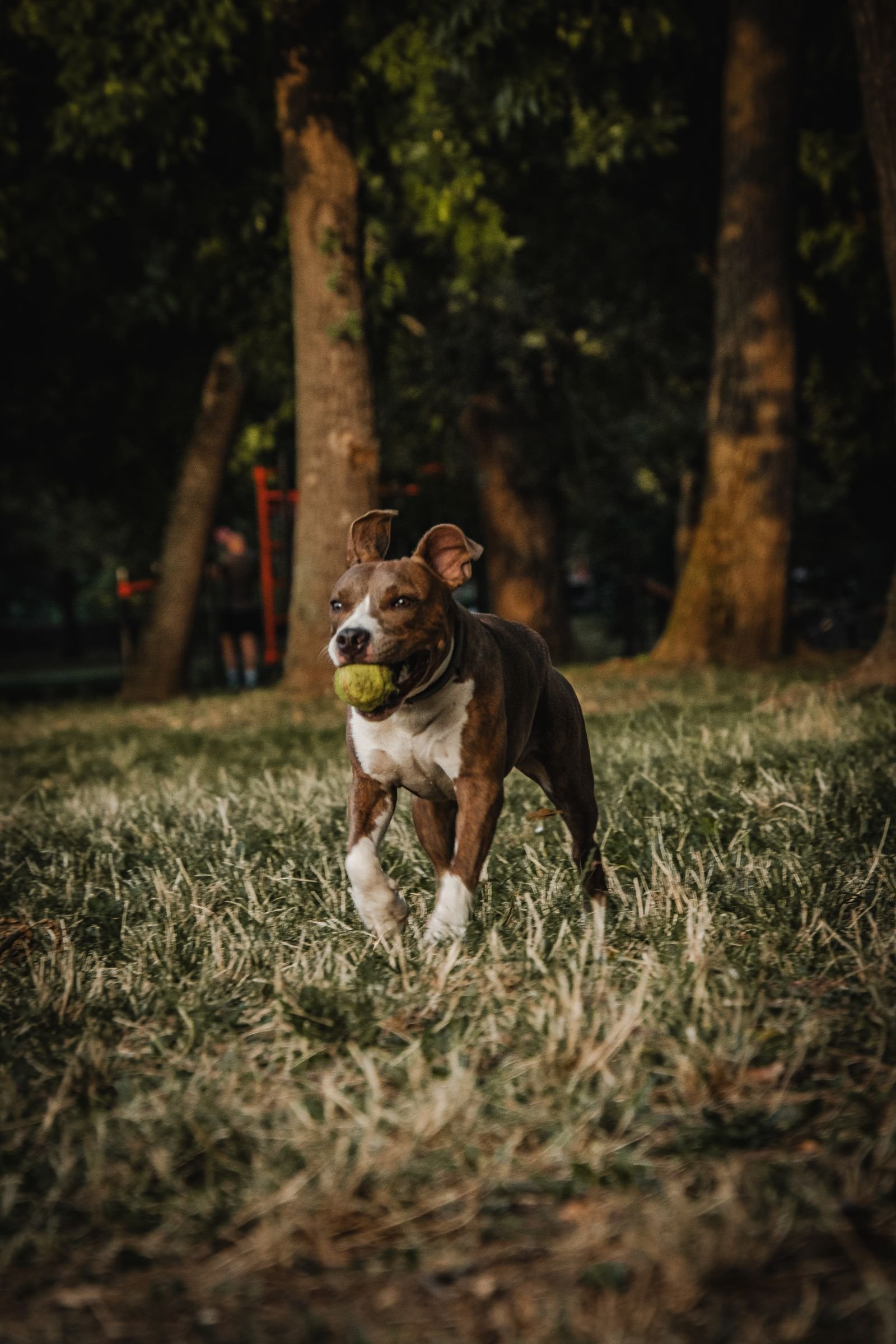
How to tell you’ve got it wrong
Forget the number. Read the dog.
Signs of too little
- Destructive chewing, digging, or shredding
- Barking at very little
- Restlessness — pacing, unable to settle in the evening
- Weight gain
- Jumping on people, mouthing, general over-the-top greeting
- Waking early and demanding attention
- Pulling hard on the lead the whole way
A “badly behaved” dog is very often an under-exercised one. It’s worth ruling out before assuming a training problem.
Signs of too much
- Lagging behind or lying down mid-walk
- Limping or stiffness afterwards, especially the next morning
- Sore or cracked paw pads
- Excessive panting that takes a long time to settle
- Reluctance to go out at all
- Sleeping unusually heavily and being hard to rouse
Overdoing it is less common than underdoing it, but it’s a real risk with puppies, seniors, overweight dogs, and flat-faced breeds.
A workable weekly shape
Rather than the same walk twice a day forever, mix it:
- Daily: at least one proper walk with plenty of sniffing time
- Several times a week: something faster — off-lead running in a safe space, fetch, or a longer outing
- Most days: 10–15 minutes of mental work
- Weekly: somewhere new
- Built in: real rest days, especially after a big day out
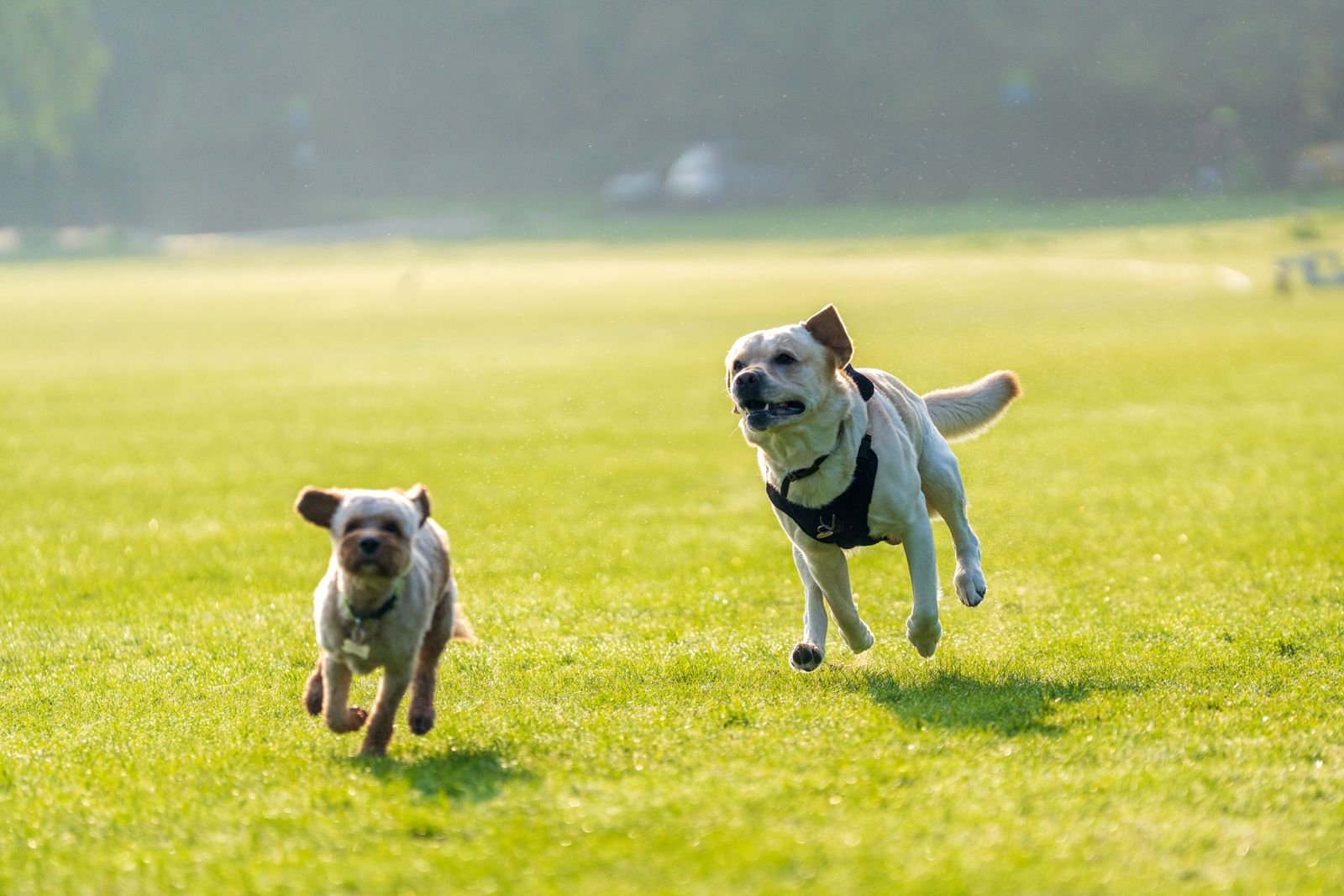
Watch the weather
Heat is the one that catches people out. Dogs cool themselves far less efficiently than we do, and pavement gets hot enough to burn paw pads well before it feels dangerous underfoot in shoes. Press the back of your hand to the ground for seven seconds — if you can’t hold it there, don’t walk your dog on it. In hot weather, move walks to early morning and late evening.
Cold matters too for thin-coated, small, elderly, and very young dogs. Short-haired breeds in real cold benefit from a coat, whatever you think of the look.
The short version
Aim for 30 minutes to 2 hours depending on breed, age, and health — then stop watching the clock and start watching the dog. Restless and destructive means more. Stiff and reluctant means less. Add mental work to whatever you’re doing, because it’s the cheapest available upgrade to your dog’s day.
And if any of the "too much" signs show up — limping, stiffness the next morning, real reluctance to go out — stop and book a vet appointment rather than pushing through. For puppies, seniors, and dogs carrying extra weight, a number from your own vet beats any general guide, including this one.