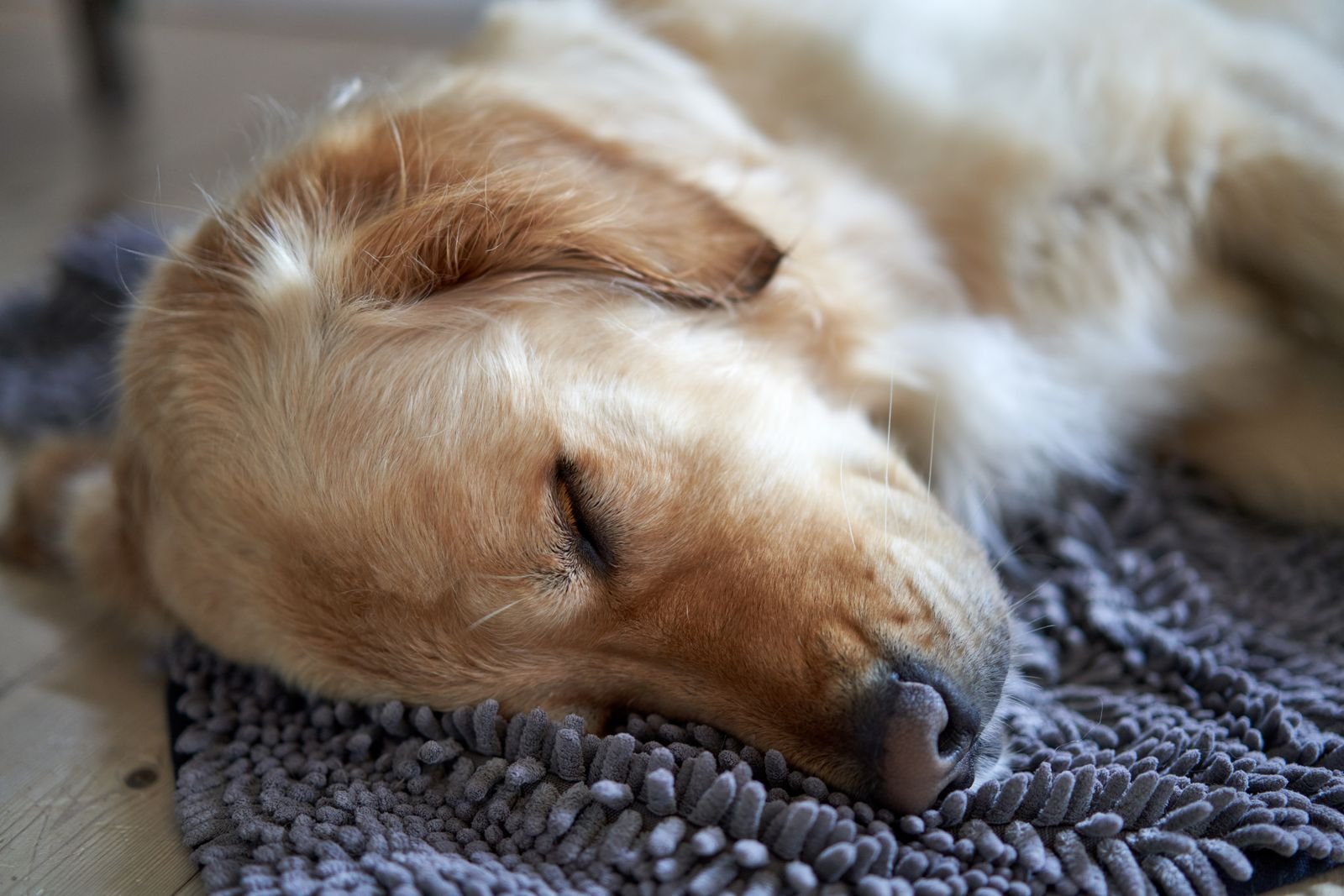
The Short Answer: That’s Normal
If it feels like your dog sleeps all day, it’s because they nearly do. Most adult dogs sleep 12 to 14 hours out of every 24. Puppies can hit 18 to 20 hours, and senior dogs often drift back toward that number as they age. Large breeds tend to sleep more than small ones.
Compare that to humans, who get their rest in one long block. Dogs don’t work that way — and understanding the difference explains almost everything about their napping.
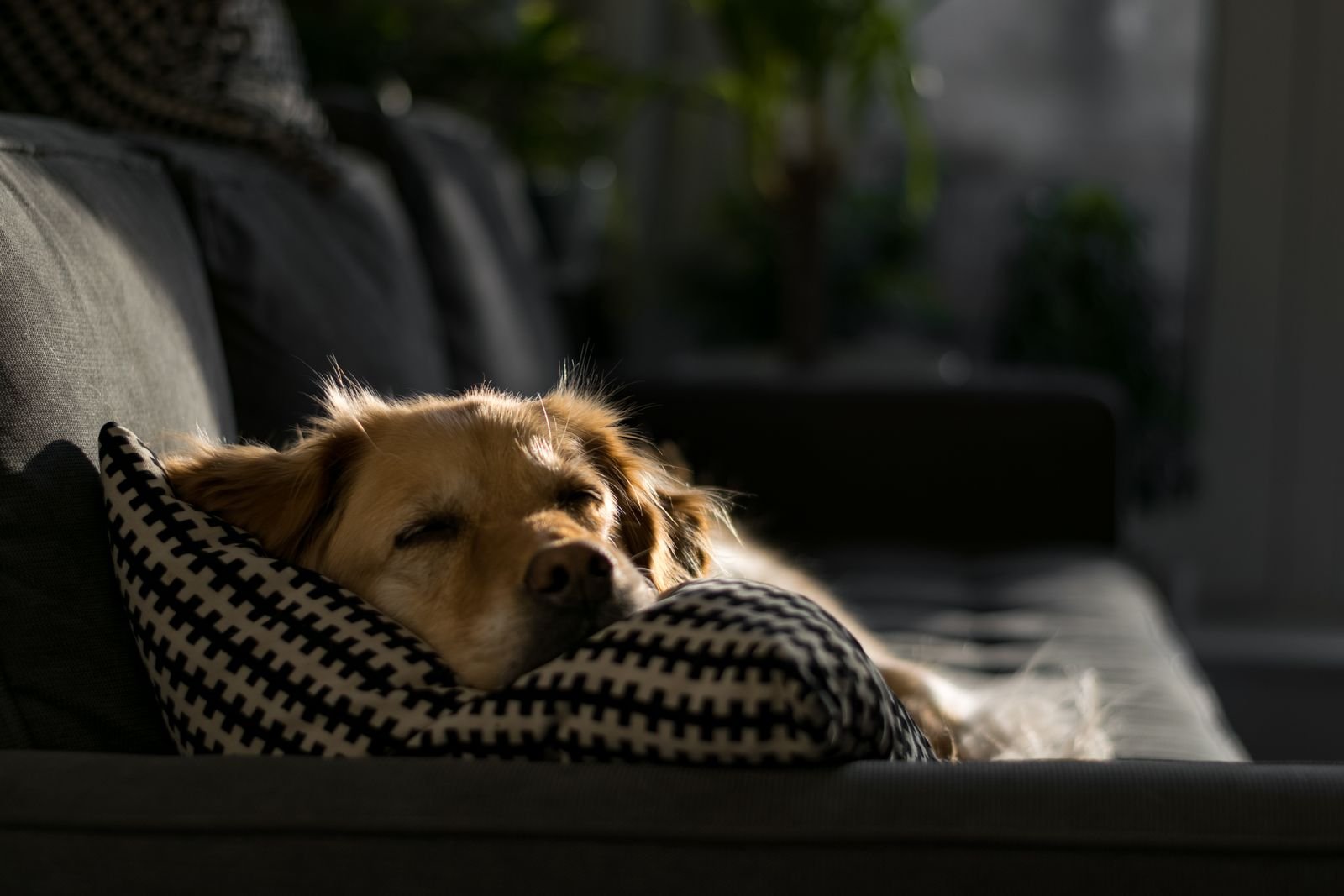
Dogs Sleep in Pieces, Not Blocks
Your dog’s sleep is polyphasic: lots of short sessions spread across the day and night rather than one long stretch. A typical nap lasts under an hour, and only a portion of it is deep sleep.
This is inherited. Wild canines had to stay ready — rest when nothing was happening, wake instantly when something was. That’s why your dog can go from dead asleep to fully alert at the sound of a bag opening in the kitchen.
It also means your dog gets less deep, restorative sleep per hour than you do. To make up for it, they simply spend more hours asleep.
What Affects How Much They Sleep
Age. Puppies burn enormous energy growing and learning; sleep is when that gets processed. Senior dogs tire faster and recover slower.
Breed and size. Big breeds like mastiffs and Saint Bernards are famous nappers. Working breeds like border collies sleep less when they have a job to do — and more when they don’t get one.
Activity level. A dog with a busy day sleeps hard. A dog with an empty day also sleeps a lot, but out of boredom rather than tiredness. Those look similar and are not the same thing.
Weather and routine. Hot days, rainy days, and quiet houses all push nap time up.
When Sleeping A Lot Is Worth a Vet Visit
Sleep itself is rarely the problem — change is the signal. Talk to your vet if you notice:
- A sudden increase in sleep with no change in routine
- Difficulty waking, or grogginess that lingers
- Sleeping more alongside reduced appetite, weight change, or increased thirst
- Reluctance to do things they used to enjoy — walks, greeting you at the door, playing
- Restless, broken sleep at night with pacing or confusion, especially in older dogs
These can point to thyroid issues, pain, infection, or age-related cognitive changes. None of them are things to diagnose at home, and all of them are easier to handle early.
Boredom Sleep vs. Real Rest
There’s one more thing worth watching. A dog who sleeps because there is genuinely nothing else to do isn’t resting — they’re checked out. The tell is usually behavior at the edges: sudden bursts of chewing, digging, or barking, or frantic excitement the moment anything happens.
If that sounds like your dog, the fix isn’t less sleep. It’s more of a day worth being awake for — a longer sniff walk, a puzzle feeder, ten minutes of training. Then the naps that follow are the good kind.