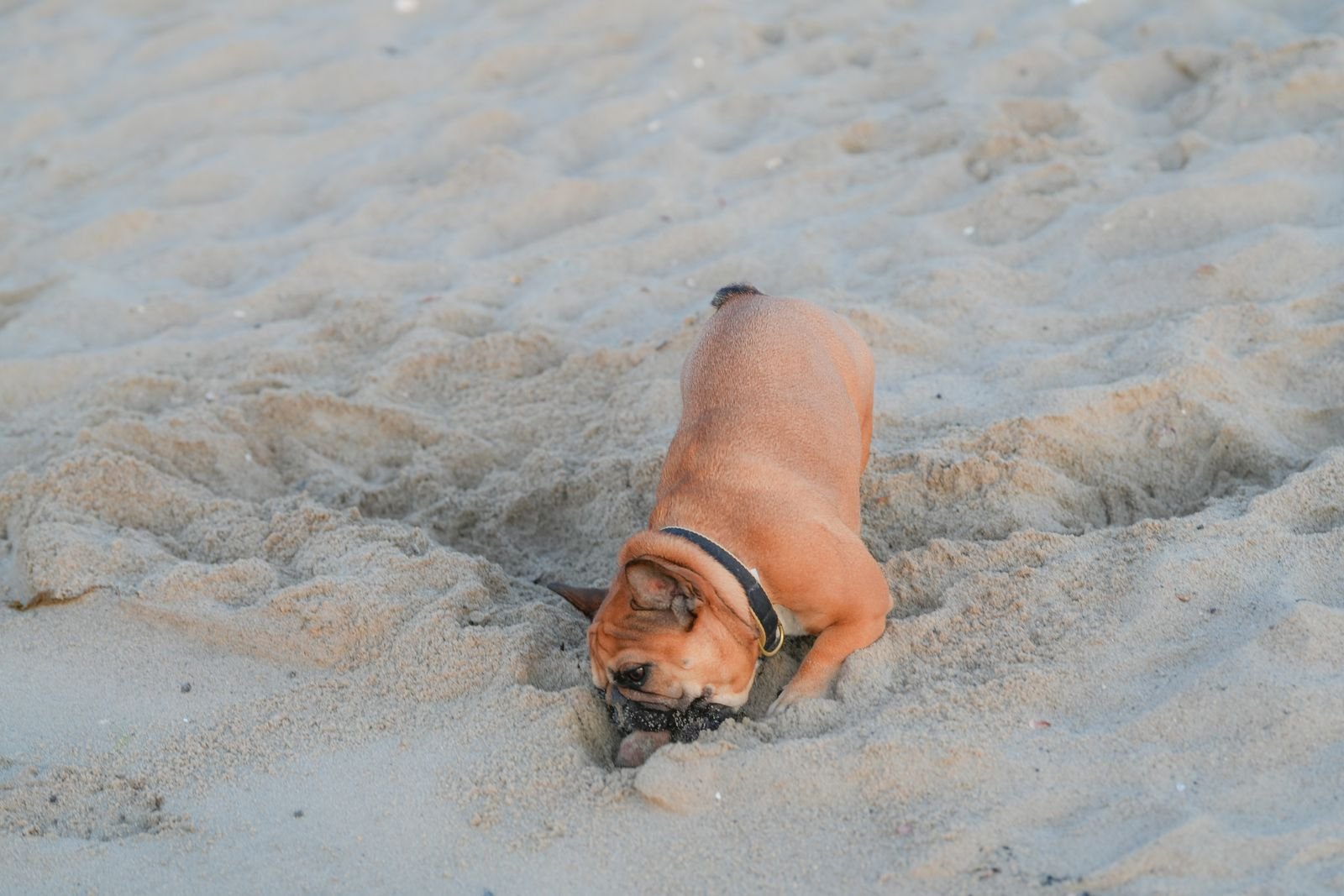
A brand new toy, a perfectly good chew, sometimes an entire dinner — and instead of enjoying it, your dog carries it off and buries it. In the garden if they have one. Under a cushion, behind the sofa, or in a laundry basket if they don’t.
It looks like nonsense. It isn’t. Burying is one of the oldest, most practical behaviours a dog has, and it survives in animals who have never once needed it.
It’s a food-storage system that predates dog bowls
Wild canids don’t eat on a schedule. They eat when there’s food, and there isn’t always food. A large kill can’t be finished in one sitting, and leaving it out means losing it to scavengers.
The solution was caching: bury the surplus, come back later. Soil is cool, dark, and relatively stable — a reasonable refrigerator if you don’t have one. It also hides the smell from competitors.
Your dog has never been short of food a day in their life. The instinct doesn’t know that. It fires on a full bowl in a warm kitchen just as readily as it would have on a lean winter.
Some breeds do it far more than others
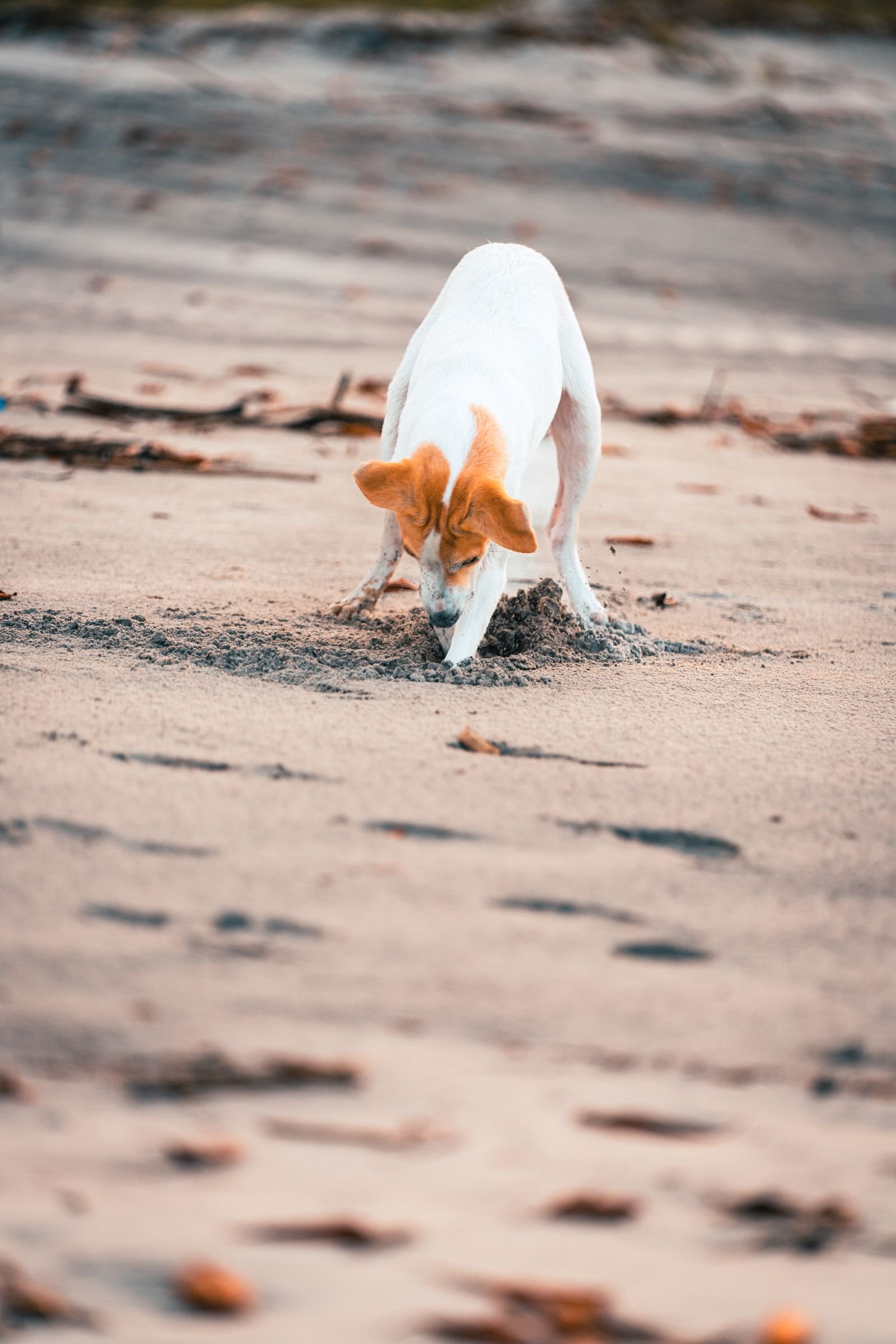
If your dog is relentless about this, look at what they were bred for. Terriers were developed to go into the ground after rodents — digging isn’t a quirk for them, it’s the job description. Dachshunds were built to follow badgers underground. Many northern breeds cached food as a matter of survival.
Retrievers and herding breeds tend to bury less, though plenty of individuals prove the rule wrong. Breeding sets a tendency, not a guarantee.
Too much of a good thing triggers it
There’s a fairly reliable pattern here: dogs bury what they have a surplus of.
A dog with one chew tends to chew it. A dog handed a third chew while two are still lying around is much more likely to take it somewhere and hide it. Same with toys. Same with food when the bowl is consistently more than they want to eat.
If burying has become constant, count what’s actually available to your dog at any moment. Rotating toys — a few out, the rest packed away — often quiets the behaviour down considerably.
It can also be about keeping things safe
Burying and resource guarding are cousins. A dog who feels their good things might be taken — by another dog in the house, by a child, by a person who keeps confiscating items — may start hiding those things pre-emptively.
The tell is emotional tone. A dog cheerfully digging a hole and tamping soil down with their nose is having a nice time. A dog who tenses, moves away when you approach, or stiffens over a hidden item is doing something else, and that’s worth addressing properly rather than waiting out.
Boredom turns it into a hobby
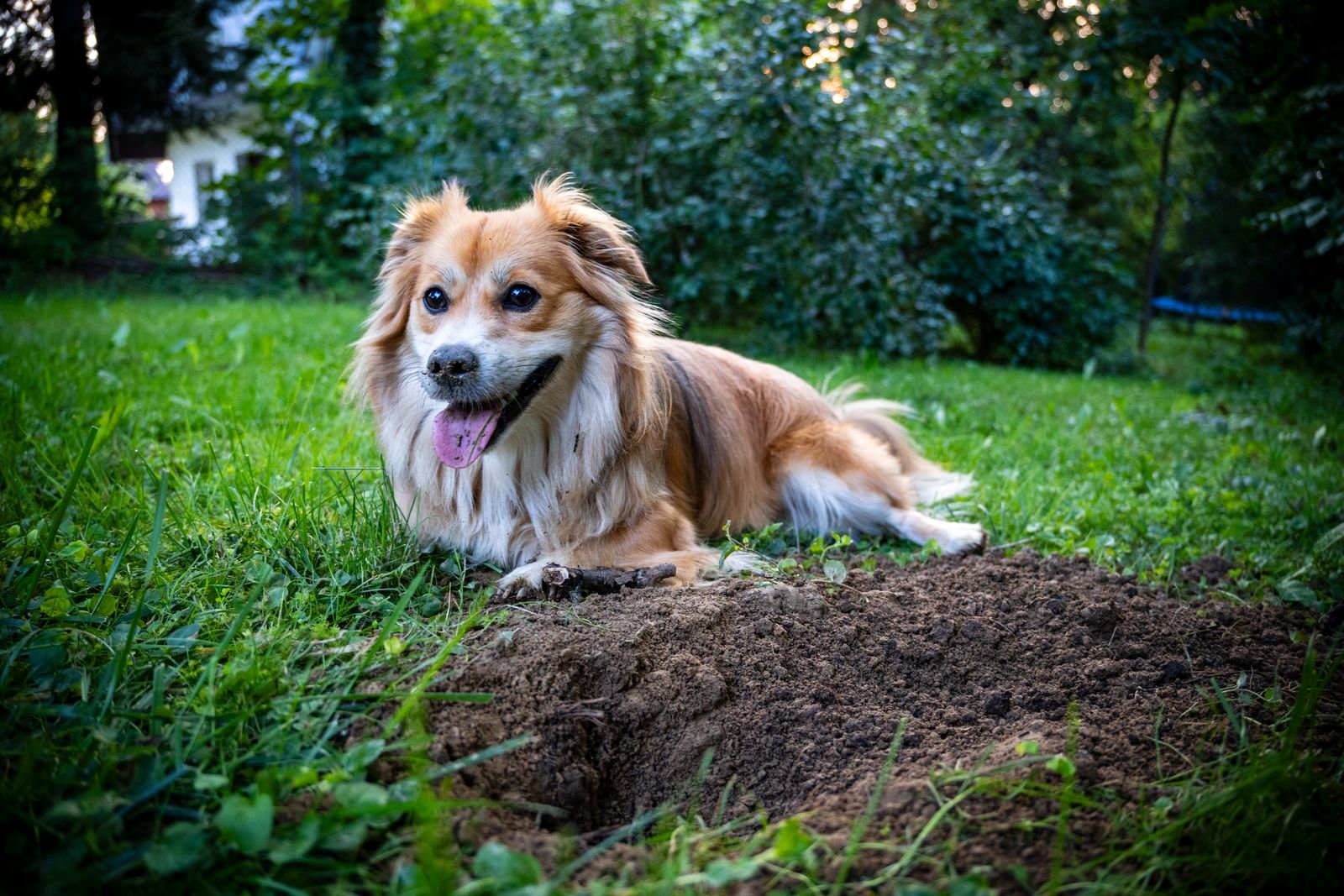
Digging and burying are genuinely satisfying activities — physical, absorbing, and repetitive. A dog with too much unspent energy and not enough to do will find them on their own.
The giveaway is that a bored dog’s holes tend to multiply and spread across the garden, rather than being a few purposeful spots. If the burying arrived alongside chewed furniture or new barking, boredom is the likelier explanation than instinct.
Stress and change can set it off
A new baby, a house move, a new dog, a schedule that suddenly changed — anxious dogs sometimes take up burying as a coping behaviour. Hiding valued items is a way of exerting control when other things feel unpredictable.
If burying started at the same time as a life change, treat the change, not the digging.
Should you stop it?
Usually, no. It’s normal, it’s harmless, and suppressing a natural behaviour tends to push it somewhere less convenient rather than removing it.
Step in when:
- They’re burying food that spoils. Raw meat or wet food hidden behind furniture becomes a genuine problem. Pick those up.
- The garden is being destroyed. Fair enough — that’s your space too.
- They’re digging near fences. A dog who tunnels under a boundary is a dog who gets out.
- They eat what they dig up. Soil, stones, and old buried food can all cause real trouble.
- It looks anxious rather than content. That’s a behaviour question, not a digging question.
Give the instinct somewhere to go
The approach that works best is redirection rather than prohibition.
- Build a digging spot. A sandpit or a marked corner of the garden, with a few toys buried in it to start. Praise them warmly for using it. Most dogs take to this quickly once they understand the deal.
- Give fewer items at once. One chew, one or two toys. Rotate the rest.
- Feed measured meals. If the bowl is regularly abandoned half-full, you’re probably serving more than they want.
- Use snuffle mats and puzzle feeders. They scratch the same searching, working itch and tire a dog out properly.
- Increase exercise and sniffing time. A long, slow, nose-down walk does more for a dog’s brain than a fast one.
The short version
Your dog buries things because thousands of years of ancestors survived by doing exactly that, and because the instinct never got the message that the fridge exists now. Sometimes it’s boredom, sometimes it’s stress, sometimes it’s simply that they have more good things than they can use in one afternoon.
Give it a legitimate outlet and it stops being a problem. Watch the emotional tone, and you’ll know quickly whether you’re looking at a happy dog with a hobby or a worried dog with a coping mechanism.