
An Ancient Long-Distance Phone Call
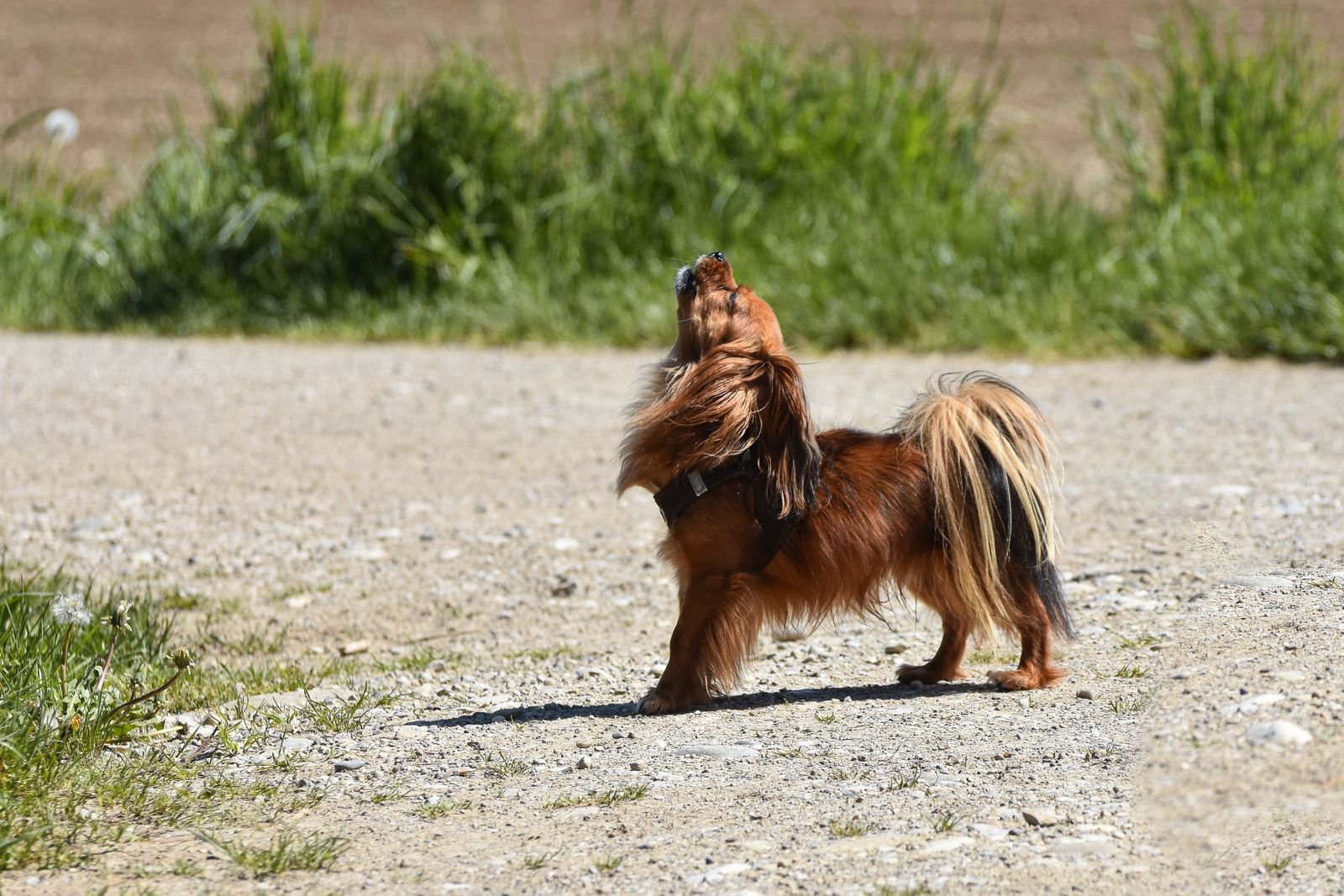
Barking is a close-range sound. Howling is the opposite — it’s built to travel. A howl carries for miles across open ground, holds its pitch, and doesn’t get lost in wind the way a bark does.
That’s the whole point. Wild canines howl to locate scattered pack members, to announce territory to other groups, and to reassemble after a hunt. Every dog alive today carries that equipment, whether they’re a wolf-adjacent husky or a twelve-pound terrier on a sofa.

The Common Triggers
Sirens and high-pitched sounds. The most famous one. Ambulances, harmonicas, certain singing voices — these sit in a frequency range close to a howl. Your dog isn’t in pain and their ears don’t hurt. They’re hearing what sounds like another dog calling from far away, and answering.
Being left alone. A dog who howls specifically when you leave is doing the original job of the howl: trying to reach a missing pack member. If this happens every time you leave and comes with pacing, destruction near doors, or accidents from a house-trained dog, it’s worth taking seriously as separation distress rather than a quirk.
Announcing something. Some dogs howl at arrivals — the mail carrier, a car in the driveway, another dog barking three houses down. This is territory talk: I’m here, and I noticed you.
Attention that worked once. If a howl ever produced laughter, filming, or a treat, smart dogs file that away. Many “musical” howlers are simply repeating what got a reaction.
Breed. Huskies, malamutes, beagles, coonhounds, and dachshunds were all bred for vocal work — tracking or communicating across distance. In these breeds, howling isn’t a problem behavior. It’s the job description.
Should You Worry?
Occasional howling is normal and healthy. Pay closer attention if:
- Howling starts suddenly in a dog who never did it
- It comes with signs of pain, disorientation, or restlessness — especially in a senior dog
- It happens only in your absence, every time (that’s the separation-distress pattern)
The first two are worth a conversation with your vet. The third is worth working on with a trainer, because it usually gets worse on its own, not better.
How to Live With It
You can’t train the howl out of a howling breed, and trying mostly frustrates everyone. What works better:
- Don’t react while it’s happening. Attention rewards it, including scolding.
- Reward silence instead — catch the quiet moments and pay for those.
- For the sound-triggered howler, distraction beats correction: a toy or a quick “sit” resets them faster than “no” ever will.
- Make sure the day has enough in it. Under-exercised dogs are louder dogs.
And honestly? A dog throwing their head back to answer a fire truck is one of the small free joys of living with them. Some of it isn’t a problem to solve.