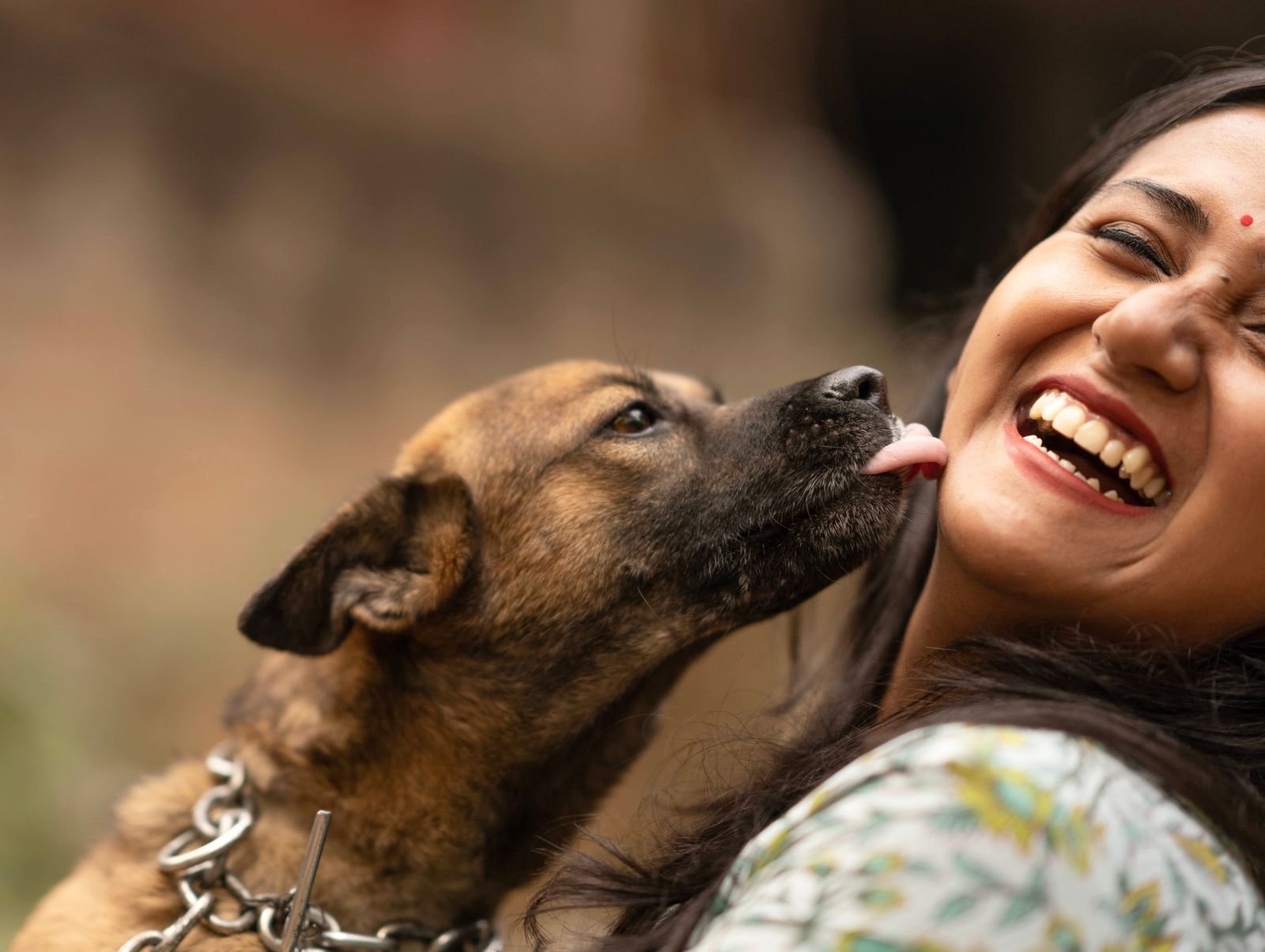
You sit down, and within seconds there’s a warm, wet tongue on your hand, your arm, or — if you’re unlucky — your face. Licking is one of the most common things dogs do to the people they live with, and it almost always means something. The tricky part is that it doesn’t always mean the same thing.
Here’s what’s actually going on, and when licking stops being sweet and starts being worth a closer look.
1. It started before they ever met you
Licking is one of the first behaviours a dog ever experiences. A mother dog licks her puppies to clean them, to stimulate them to breathe in the first minutes of life, and to keep the nest area clean. Puppies lick back, and they lick each other.
So by the time a dog arrives in your home, licking is already wired in as something safe, social, and comforting. When your dog licks you, they’re using a behaviour they learned in the first weeks of life on a new family member: you.
2. It’s how they say hello
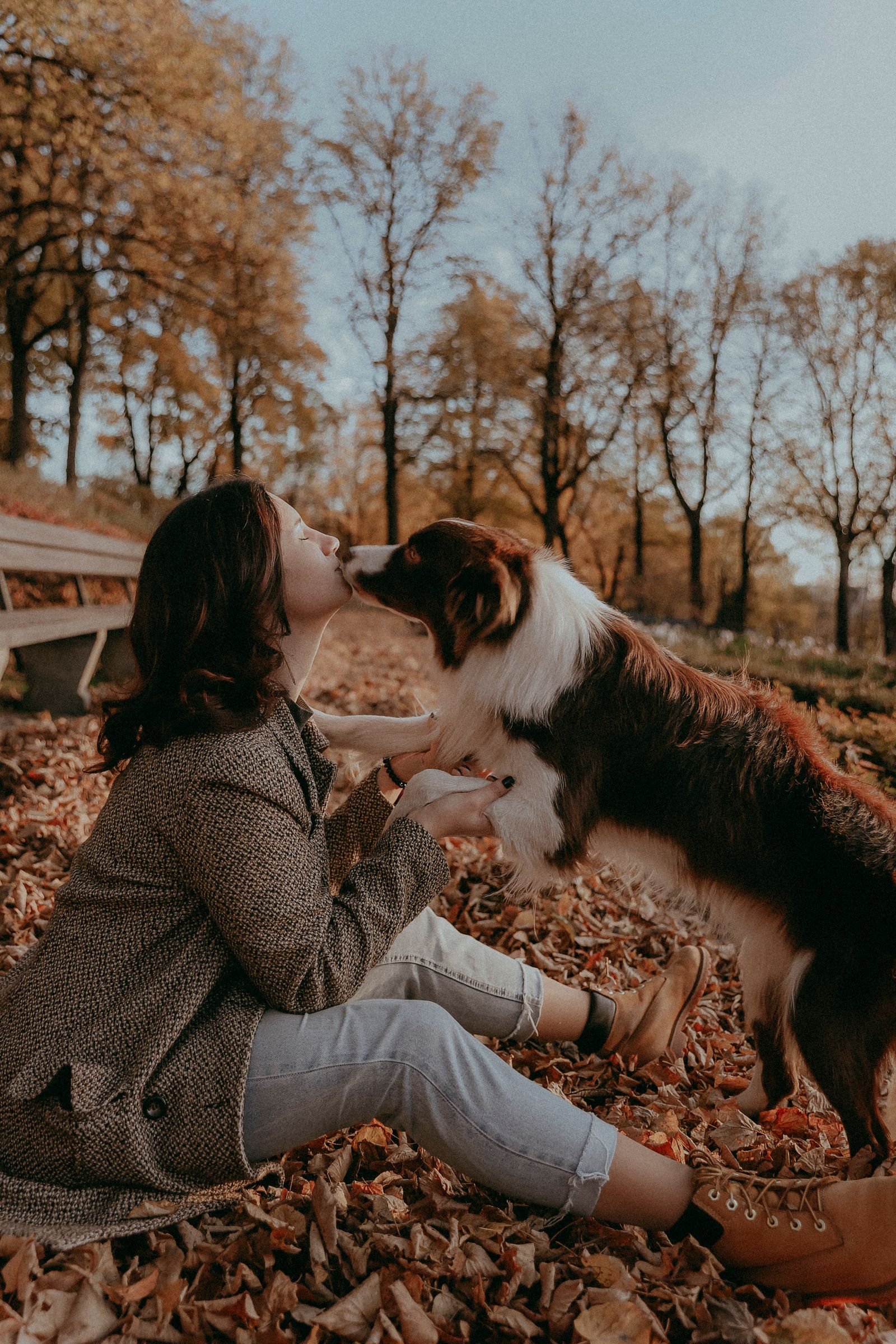
In wild canid groups, younger animals lick around the mouths of returning adults. It’s a greeting and a request rolled into one — a polite, low-stakes way of saying “you’re back, and I’m glad.”
Your dog doesn’t need you to bring anything back. But the greeting stuck. That burst of licking the moment you walk through the door is closer to a handshake and a hug at the same time than to anything else in their behavioural vocabulary.
3. You taste interesting
Less romantic, but true. Human skin carries salt, traces of whatever you last ate, lotion, sweat after a walk. A dog’s sense of smell and taste is dramatically better than ours, and a forearm after a workout is genuinely a rich source of information.
If the licking is focused on your hands right after you cook, or your legs right after the gym, this is probably most of the answer.
4. It calms them down
Repetitive licking releases calming chemistry in a dog’s brain. It’s a self-soothing behaviour, in the same category as a person bouncing a knee or fiddling with a ring.
A dog who licks you during a thunderstorm, in the car, or in a vet waiting room isn’t just being affectionate. They’re managing their own stress, and they’ve chosen you as the thing that makes them feel steadier.
5. It worked once, so they kept doing it
This one is on us. A dog licks your hand, you look down, you talk to them, you scratch their ears. From the dog’s point of view, licking is now a button that produces attention.
Dogs are excellent at noticing which of their behaviours change your behaviour. If licking reliably gets a reaction — even a mild “hey, stop that” — it’s being reinforced.
6. They’re reading you
Dogs are unusually good at picking up human emotional state, and many of them respond to a person who is upset by moving closer and licking. Whether this counts as empathy in the way we’d use the word is still debated among researchers, but the pattern itself is well documented and familiar to almost anyone who has cried in front of their dog.
When licking is worth paying attention to
Most licking is normal. A few patterns are worth noticing:
- It’s constant and hard to interrupt. Licking that goes on and on, and that your dog struggles to stop, can be a sign of anxiety rather than affection.
- They’re licking themselves, not you. Repeated licking of one paw, one leg, or one patch of skin is worth having looked at. Bald patches, raw skin, or a spot they keep returning to are all reasons to book a vet appointment rather than wait it out.
- They’re licking surfaces. A lot of licking of floors, walls, or carpet that wasn’t there before is a change worth mentioning to your vet. Don’t try to work out the cause yourself — just report what you’re seeing and how often.
- It came on suddenly. Any behaviour that changes sharply for no obvious reason is worth a conversation with your vet or a qualified behaviourist.
Is it safe to let your dog lick you?
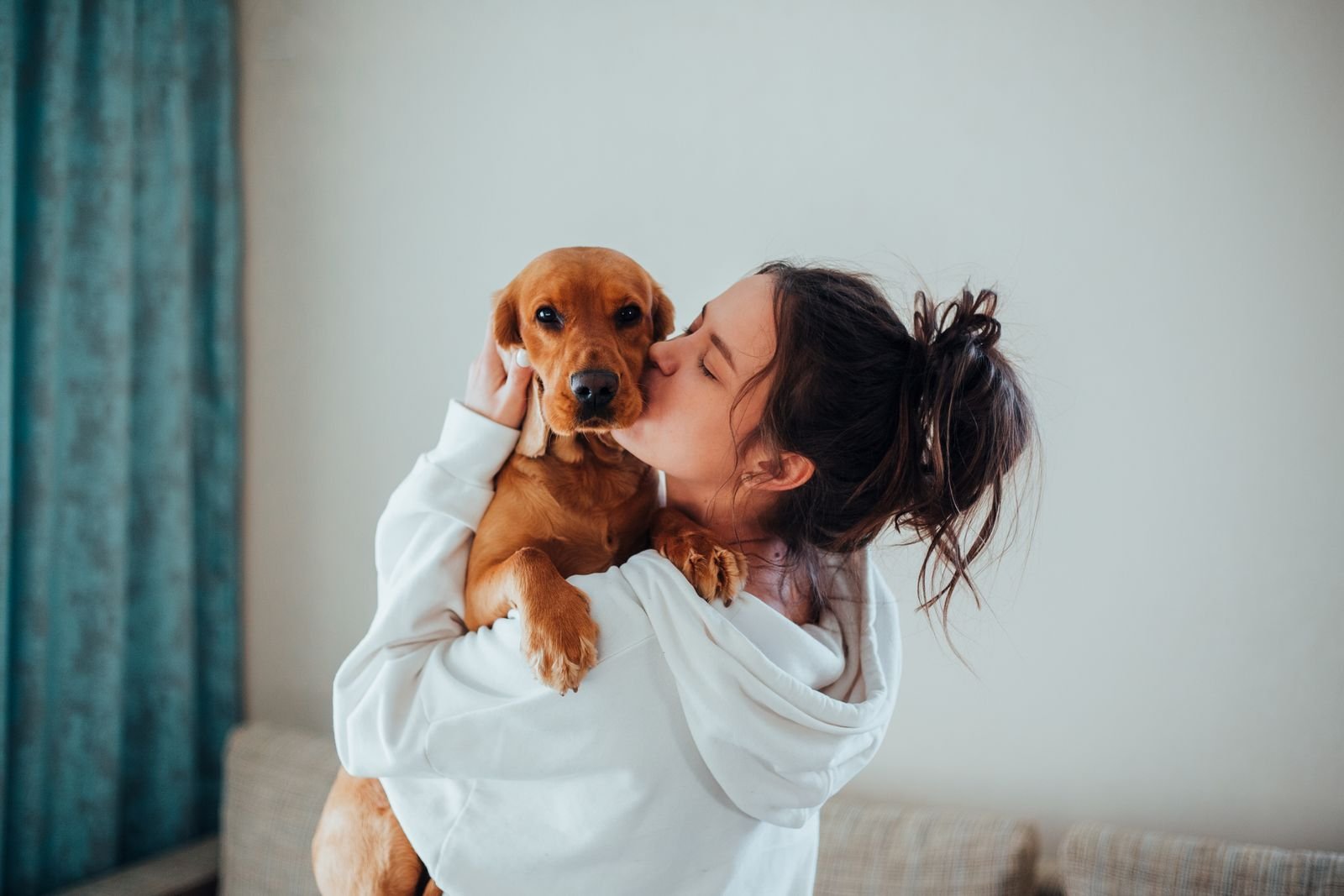
For most healthy adults, a dog licking your hands or arms is low risk — wash afterwards and you’re fine. Be more careful about your face, and more careful again if the person being licked is a baby, is elderly, or has a weakened immune system. Dogs’ mouths carry bacteria that don’t trouble them and aren’t always harmless to us. Keep licking away from open cuts and scrapes. If anyone in your household is immunocompromised, their doctor is the right person to set the rules, not a blog.
How to ask for less licking, without making it a fight
If you’d rather your dog didn’t lick you constantly, punishment isn’t the tool — you’d be punishing a friendly, self-soothing behaviour, which tends to create confusion rather than clarity.
Try this instead:
- Stop rewarding it. When the licking starts, quietly stand up and step away. No scolding, no eye contact. The behaviour stops producing attention.
- Give them something else to do. Teach a “go get your toy” or a hand target, and reward that at greeting time. A dog with a job at the door licks less.
- Reward the calm version. Pet and praise your dog when they greet you without the tongue. What gets rewarded gets repeated.
- Check the basics. A dog who is under-exercised and under-stimulated will use whatever behaviours they have to get engagement. Sometimes the fix isn’t training at all.
The short version
Your dog licks you because it’s how they were raised, how they greet, how they calm themselves, and how they’ve learned to get your attention — usually several of those at once. It’s one of the more genuine compliments available in the animal kingdom.
Just keep an eye on the intensity. Affectionate licking is a good sign. Licking your dog can’t seem to stop — especially at themselves — is a signal to get a professional opinion rather than a puzzle to solve at home.