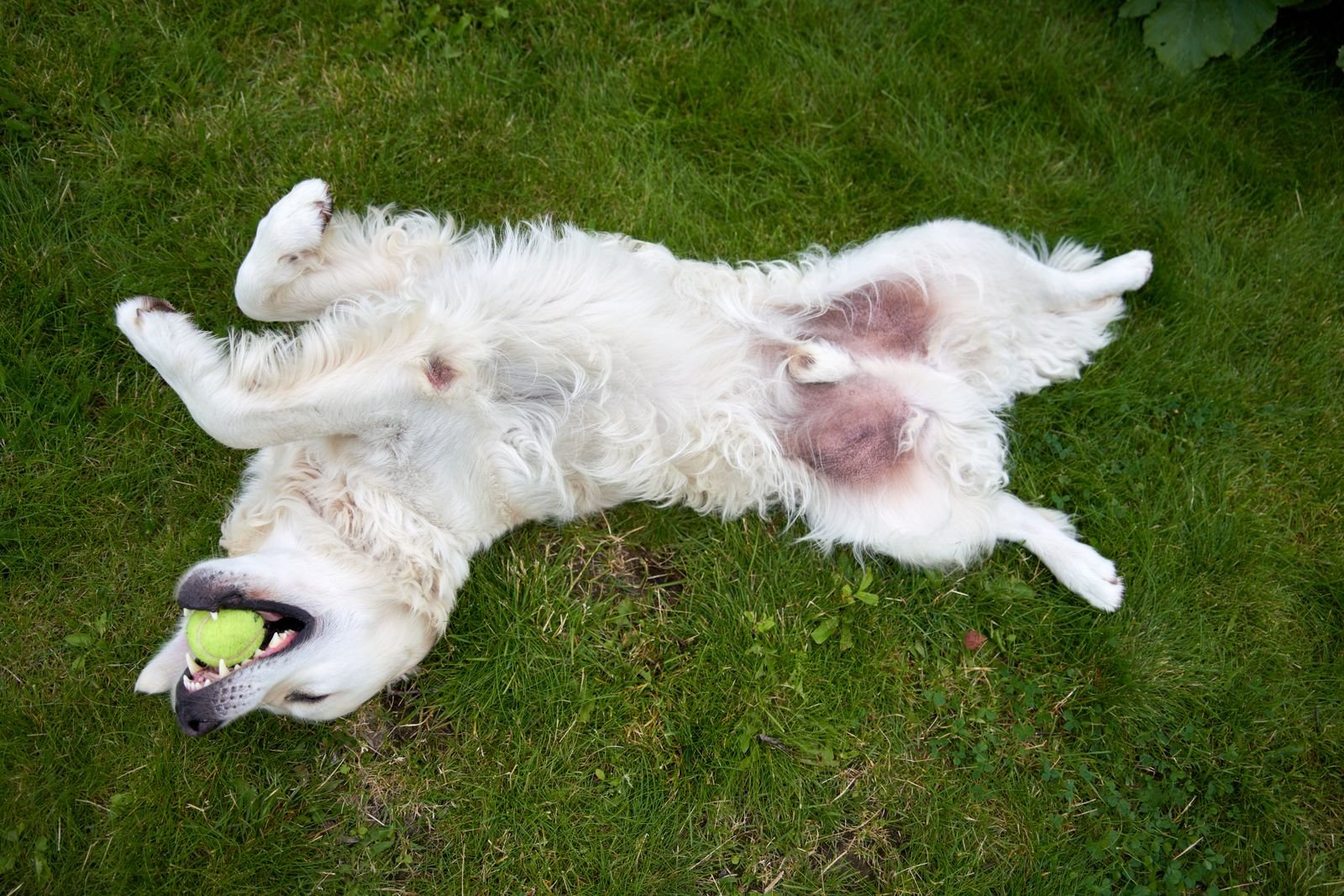
A dog rolling onto their back is one of the most misread signals in the entire dog-human relationship. Most people see it and reach straight for the belly. Sometimes that’s exactly right. Sometimes it’s the opposite of what the dog asked for.
The position is identical. The rest of the body tells you which one you’re looking at.
Version One: “I Trust You, Rub Me”
The relaxed belly-up dog is loose everywhere. Legs flop open at odd angles. The tail wags in easy sweeps against the floor. The mouth hangs slightly open. The eyes are soft, maybe half-closed. The whole body has the boneless quality of a dog with nothing to worry about.
This is a genuine invitation, and it’s a real compliment. The belly is the most vulnerable part of a dog’s body — exposing it voluntarily to a relaxed dog means they feel safe with you.
Rub away. Most dogs who ask like this want long, slow strokes on the chest and upper belly.
Version Two: “Please Stop”
The appeasing belly-up dog looks completely different once you know what to look for. The body is stiff. The tail is tucked tight against the belly or barely moving. The head is turned away, often with that crescent of white eye showing. Legs are held close rather than flopped open. Sometimes there’s lip licking, or a small submissive urination.
This dog isn’t inviting anything. They’re doing the dog equivalent of going completely still and hoping the situation ends. It shows up most often with strangers, at the vet, or when a dog is overwhelmed.
Reaching in to rub this dog’s belly teaches them that the signal didn’t work — and dogs who learn their quiet signals don’t work sometimes stop using them. The stiff-versus-loose distinction runs through every signal a dog gives; our guide to dog body language walks through the whole set.
The Three-Second Test
Not sure which one you’re looking at? Rub for three seconds, then stop and take your hand away.
- The dog nudges your hand, repositions closer, or stays loose → they wanted it, carry on
- The dog gets up and moves away, or stays frozen → they didn’t, let them be
This works for every kind of petting, not just bellies. It costs nothing and it tells you the truth.
How to Pet a Dog Who Actually Wants It
Most dogs have clear preferences, and most people pet dogs in the places dogs like least.
- Usually welcome: chest, base of the neck, shoulders, along the side of the body
- Often tolerated rather than enjoyed: the top of the head, especially a hand coming down from above
- Frequently disliked: paws, ears, tail, and the muzzle
Approach from the side rather than head-on, keep your hand low rather than reaching over the head, and let the dog close the last bit of distance themselves. A dog who steps in wants contact. A dog who stays put has told you something.
Teaching This to Children
A dog rolling over looks like an invitation to a child, and children reach fast. This is worth teaching early, and it’s simple enough for a five-year-old:
- Ask the dog first. Hold out a hand low, and wait. If the dog comes to you, they said yes.
- Pet the chest, not the belly or the head.
- Stop every few seconds and see if the dog asks for more.
- If the dog gets up and walks away, they’re finished. Nobody follows.
Children and dogs get along best when the child learns that a dog is allowed to say no. That single rule prevents more trouble than any amount of supervision.
The Other Reasons Dogs Roll Over
Cooling off. The belly has thinner fur and less insulation. On a warm day, belly-up on cool tile is temperature control, not a request.
Play. During rough play with another dog, rolling onto the back is often a tactical move — it frees the paws and mouth. Watch a play session and you’ll see dogs flip back and forth constantly. This isn’t submission, it’s wrestling.
A scratch they can’t reach. Sometimes it’s just an itchy back and your rug is the tool.
One Thing to Watch
If a dog who has always enjoyed belly rubs suddenly flinches, tenses, or moves away when you touch their belly, don’t push it. New sensitivity in one area of the body can mean pain, and abdominal pain in particular is worth a vet’s attention rather than guesswork.
The general rule holds here as everywhere: it’s not the behavior that matters, it’s the change.