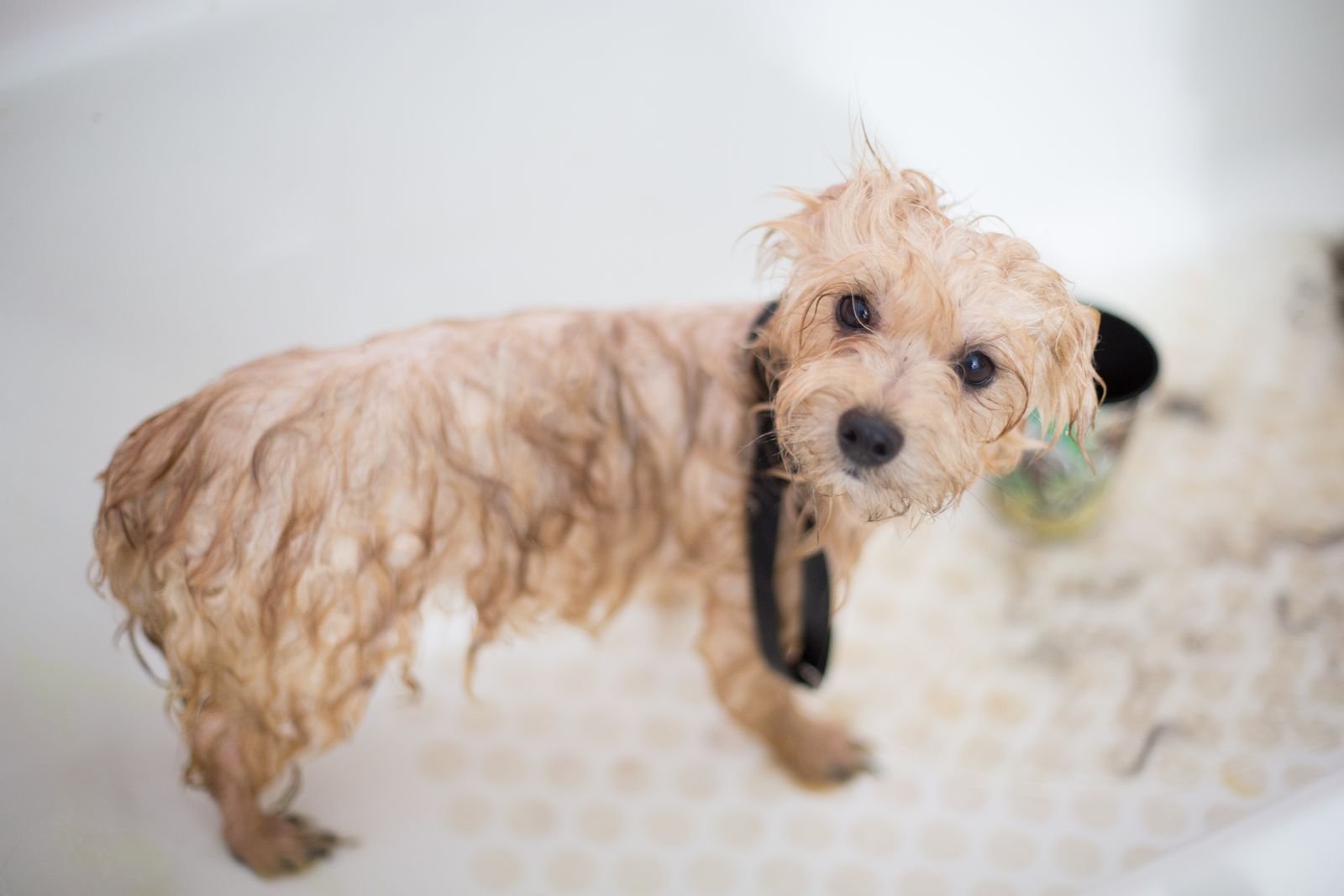
The Bath Your Dog Didn’t Ask For
Somewhere along the way, a lot of us picked up the idea that a clean dog is a dog who gets bathed on a schedule. Every week. Every other Saturday. Whenever the guest room starts to smell like a dog lives in it, which it does.
But your dog’s skin is not doing the same job yours is. Dogs produce oils that coat the hair shaft and sit on the skin, and that layer is doing real work — it keeps moisture in, keeps the coat water-resistant, and supports the population of normal skin bacteria that live there and generally behave themselves. Shampoo, even a gentle one, strips some of that away. Do it often enough and you get a dog who is flakier, itchier, and frankly smellier than when you started, because skin that has been stripped tends to overproduce oil to compensate.
The other thing worth saying plainly: a healthy dog does not need to smell like nothing. A faint warm-corn-chip-and-clean-laundry smell is what a normal dog smells like. That is not a problem to be solved.
Your Dog’s Coat Is the Actual Schedule
Coat type does more to determine bathing frequency than anything else, with lifestyle running a close second. Most vets and groomers work from ranges rather than hard rules, and the ranges are wider than people expect.
- Short, smooth coats (Beagles, Boxers, Labs) shed dirt well on their own. Many do fine going a couple of months between baths, sometimes longer.
- Double coats (Huskies, German Shepherds, Golden Retrievers) are built to insulate and self-clean. Over-bathing works against that. Brushing matters far more than shampoo here.
- Curly and continuously growing coats (Poodles, Doodles, Bichons) trap dirt and mat easily, so they typically need bathing more often — usually tied to their grooming appointments.
- Wiry coats (terriers, Schnauzers) lose some of their characteristic texture with frequent shampooing. Less is generally more.
- Hairless breeds are the exception that goes the other direction — no coat means skin oils sit on the surface, so they often need more regular washing.
Then layer lifestyle on top. A dog who spends weekends in creeks and pastures needs more baths than a dog whose biggest adventure is the mailbox. A dog with a diagnosed skin condition may be on a bathing schedule your vet set deliberately, and that schedule beats any general advice you read online, including this.
Signs It’s Actually Bath Time
Skip the calendar and use your senses. Your dog will tell you.
The obvious one is smell — not the baseline dog smell, but the sharper, sour, something-is-happening smell that makes you turn your head. Visible grime is another: dirt worked into the coat, a greasy feel when you run your hand along the back, or that flat, dull look a coat gets when oil has built up. If your dog rolled in something you’d rather not identify, the decision has been made for you.
Excessive scratching is a trickier signal. Sometimes a bath helps by rinsing off pollen or dust. Sometimes scratching is a sign of allergies, fleas, or a skin infection, and a bath at home won’t touch the cause. If the itching is persistent, or you’re seeing red skin, hot spots, hair loss, or scabs, that’s a vet visit rather than a shampoo problem.
Doing It Without Wrecking the Coat
Use a shampoo formulated for dogs. Human skin sits at a different pH than dog skin, so human shampoo — baby shampoo included — is a poor fit and tends to dry things out. Lukewarm water, not hot. Work the shampoo down to the skin rather than just foaming the surface, then rinse considerably longer than you think you need to; leftover residue is a common cause of post-bath itching.
Brush before the bath, especially on long or curly coats. Water turns a loose tangle into a tight mat, and a tight mat is a groomer’s problem by then. Dry thoroughly afterward, particularly with double coats, where a damp undercoat can stay wet for hours.
Between baths, a brush does most of the heavy lifting. It lifts dirt out, spreads the oils your dog worked hard to make, and buys you weeks. A damp cloth handles muddy paws. Waterless foams are fine for spot cleaning.
Mostly, though, the goal is to stop thinking of bathing as maintenance and start thinking of it as a response. Your dog is already doing most of the work.