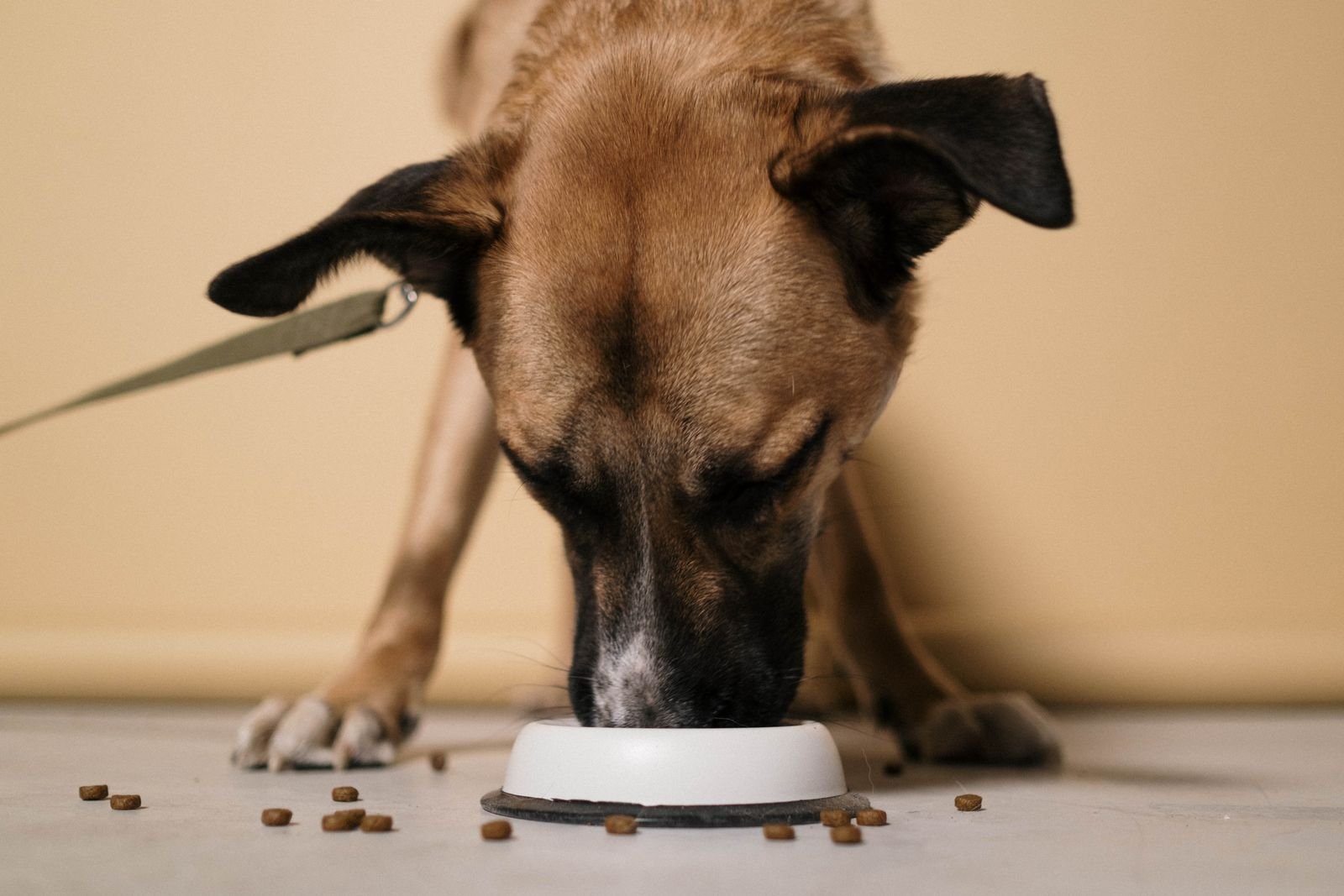
What the Bag Is Actually Telling You
Turn the bag around and you will find a tidy chart: weight in one column, amount in the other. It looks authoritative. It is not wrong, exactly, but it is a starting point rather than a prescription, and it tends to run generous.
There are good reasons for that. A feeding chart has to cover every dog of a given weight — the border collie who works a farm and the beagle who works the couch — so it lands somewhere in the middle and errs upward. Manufacturers would rather your dog gained a little than looked underfed on their food.
There is a second wrinkle most people miss. Those charts are built around your dog’s ideal weight, not the number on the scale today. If your dog is carrying extra, feeding to what he currently weighs quietly locks that weight in. If you are not sure what his ideal is, that is a two-minute question at your next vet visit and worth asking.
So use the bag. Measure it properly with a cup or a kitchen scale rather than eyeballing it into the bowl, since a casual scoop drifts upward over weeks without anyone noticing. Then treat that amount as your opening offer, not the final word.
The Number You Can Feel
The real measurement is not in the bowl. It is under your hands, and it takes about fifteen seconds.
Run your palms flat along your dog’s sides. You should be able to find the ribs without pressing hard — there should be a thin layer over them, the way the back of your hand feels over your knuckles. Ribs you have to hunt for through padding means too much. Ribs that feel sharp and exposed means too little.
Then look at him from above while he is standing. There should be a visible narrowing behind the rib cage — a waist. From the side, the belly should tuck up rather than running level from chest to back legs. Long-coated dogs hide all of this beautifully, which is exactly why the hands beat the eyes.
Check every couple of weeks and note what you find. If the padding is building, cut back by a modest amount — think a tenth of what you are feeding, not a third — and give it three or four weeks before you judge. Weight moves slowly in both directions, and dramatic cuts mostly produce a dog who follows you around looking betrayed.
Why Two Dogs the Same Size Eat Differently
Weight sets the starting line. Several other things move the number from there, sometimes substantially:
- Activity. A dog hiking most weekends burns through noticeably more than a dog whose big event is the mail carrier. Adjust seasonally, too — most dogs move less in deep winter.
- Age. Puppies need more fuel for their size than adults and eat on a different schedule entirely. Older dogs typically slow down and need less, though some seniors lose condition and need more.
- Spaying or neutering. Energy requirements usually drop after the procedure, and often by a meaningful margin. Feeding the same amount afterward is one of the most common ways a healthy dog quietly gains.
- Health. Thyroid issues, diabetes, kidney disease, and various medications all change the math. This is vet territory, not blog territory.
Puppies especially deserve a real conversation with your vet rather than a chart, since underfeeding or overfeeding during growth carries consequences that a chart cannot see.
The Part of the Bowl Nobody Counts
Then there are treats, which almost nobody adds up. The training rewards, the crust of toast, the last bite of cheese, the biscuit at the door — none of it feels like a meal, and collectively it can be a serious share of the day.
The usual veterinary guidance is to keep treats to roughly ten percent of daily intake or less, with the rest coming from complete food. The practical fix is not to stop giving treats. It is to break them smaller — dogs count events, not grams — and to shave a little off the bowl on a heavy training day.
Feeding well is mostly this: start with the bag, then let your hands correct it, month after month, while your dog is busy being unhelpfully enthusiastic about the whole process.